
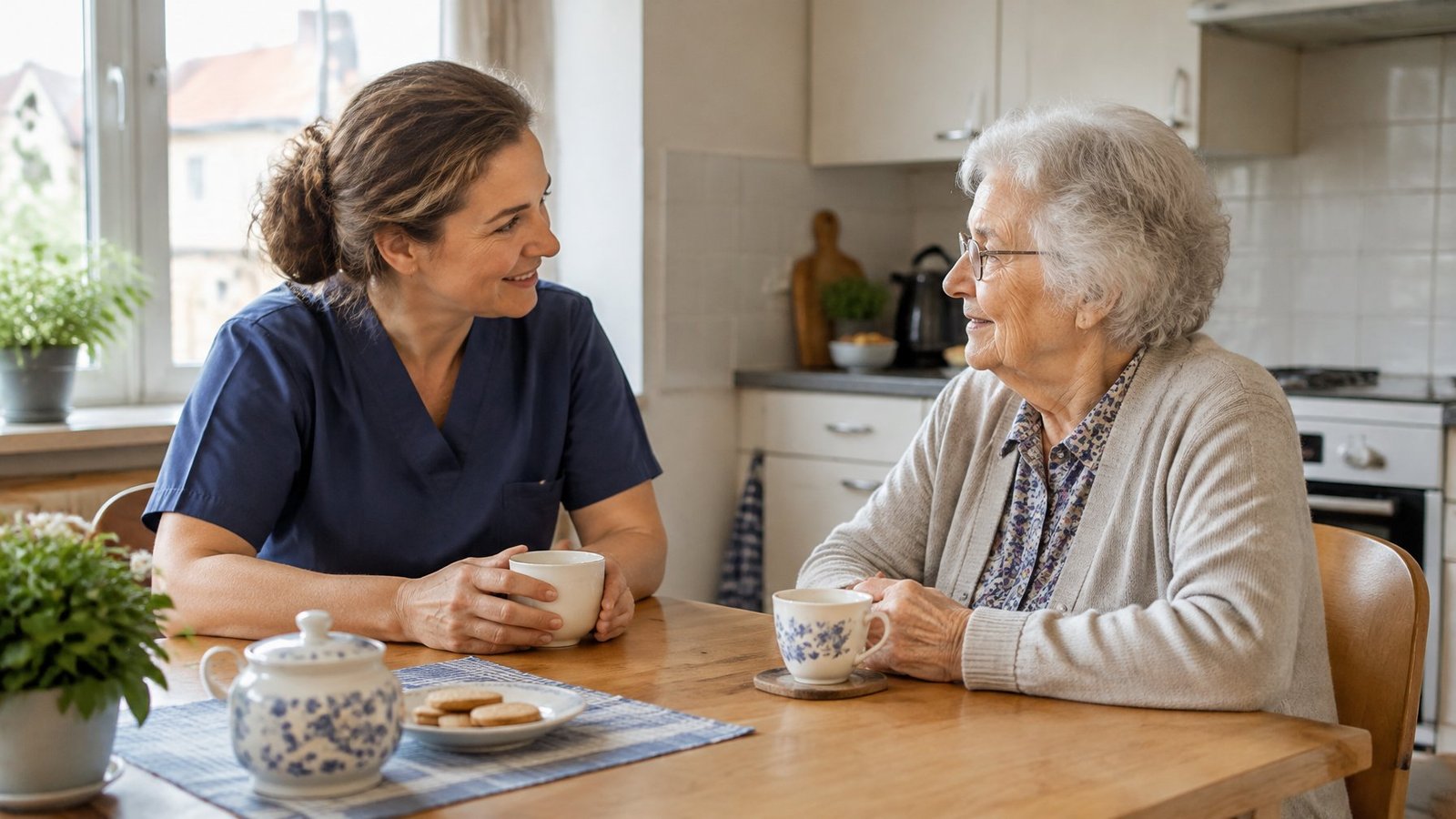
Families often need care at the two ends of life’s big transitions: when a baby arrives and when an older or chronically ill relative needs help to stay at home.
In the Netherlands, both are supported by a system that puts a strong emphasis on care at home.
For nurses, caregivers and families who are new to the Dutch system, especially in a city like Amsterdam, it helps to understand how the different types of support fit together.
The Dutch Focus on Care at Home
The Netherlands has a long tradition of supporting people in their own homes rather than in hospitals or institutions whenever that is possible.
District nurses, home care teams and maternity care assistants all visit people where they live.
This approach allows people to stay in familiar surroundings, close to family and neighbours.
It also means families play an important role, working alongside professionals rather than handing over care completely.
Home Care for Older and Chronically Ill People
What Home Care Can Include
Home care covers a wide range of support, from help with washing and dressing to nursing tasks such as wound care, medication management and monitoring chronic conditions.
Some providers also help with household tasks or offer companionship.
Personalised Care Matters
Every person’s needs are different, and good home care adapts to them.
For people with long-term conditions, a provider who understands the condition can make daily life considerably easier.
In Amsterdam, HerfstZorg provides home care with a focus on personalised support for people living with fibromyalgia.
It also shares guidance on symptoms and on how relatives can be supported with tailored care, and it has a strong reputation in its online reviews.
Questions Families Should Ask
- What tasks will the care team carry out, and how often will they visit?
- Will the same carers come regularly, or does the team rotate?
- How does the provider communicate with family members?
- What happens if needs change suddenly?
- Can carers communicate in the language the person is most comfortable with?
Essentially Amsterdam’s guide to home care and nursing homes in Amsterdam explains the main options in the city and is a useful starting point for families comparing providers.
Supporting Family Caregivers
Caring for a loved one can be rewarding, but it is also demanding.
Family caregivers often juggle care with work, children and their own health.
Nurses and care professionals can help by:
- Explaining clearly what to expect as a condition progresses
- Teaching practical skills, such as safe lifting or managing medication
- Encouraging caregivers to take breaks and accept help
- Pointing families towards local support services
A caregiver who is supported is better able to provide good care over the long term.
Maternity Care in the Netherlands
The Dutch approach to pregnancy and birth is well known internationally.
Midwives play a central role in care for healthy pregnancies, and after the birth many families receive maternity care at home, known as kraamzorg, where a trained maternity care assistant visits to support the mother and baby in the first days.
For expat families, this system can feel unfamiliar at first.
It helps to register with a midwife early in pregnancy and to arrange maternity care in good time.
Preparing for Birth
Many parents-to-be look for extra preparation beyond standard appointments.
Childbirth classes, breathing techniques, doulas and holistic approaches can all help people feel more confident and informed.
My Birthing Voice, based in Hilversum, a short train ride from Amsterdam, offers childbirth classes and describes itself as a place for voice liberation and holistic birth preparation.
What to Look for in Birth Preparation
- Evidence and respect. Good preparation gives balanced information and respects your choices.
- Partner involvement. Classes that include partners help both people feel ready.
- Practical skills. Breathing, positions and coping techniques are useful whatever kind of birth you have.
- Connection to your care team. Preparation should complement the advice of your midwife or doctor, not replace it.
The Role of Nurses Across Both Worlds
Whether they work in home care, maternity care or district nursing, nurses in the Netherlands often act as a bridge between families and the wider health system.
They coordinate with doctors, therapists and social services, and they are often the first to notice when something is changing.
For nurses coming from other countries, the emphasis on independence, home visits and close collaboration with families can be a significant change.
It is also one of the most rewarding parts of working in Dutch care.
When Language Is a Barrier
Amsterdam is home to people from many countries, and not every patient or parent speaks Dutch fluently.
Language can make care harder, especially when discussing symptoms, medication or birth plans.
For families, it helps to ask early whether a provider can communicate in your preferred language, and to bring a trusted relative or friend to important conversations if needed.
Written instructions are useful too, since they can be translated and read again later.
For nurses, simple strategies make a difference: speaking slowly, checking understanding by asking people to explain back in their own words and using professional interpreting services for important medical discussions.
Good communication is part of good care, and it builds the trust that home care depends on.
Final Thoughts
Home care and maternity support share a common goal: helping people through important life stages in the comfort of their own homes.
For families in Amsterdam, understanding the options, asking the right questions and finding providers who fit their needs makes those stages calmer and more manageable.
For nurses, it is a reminder of how much good care happens outside hospital walls.